From Classroom to Community. The CAPS Legacy Project
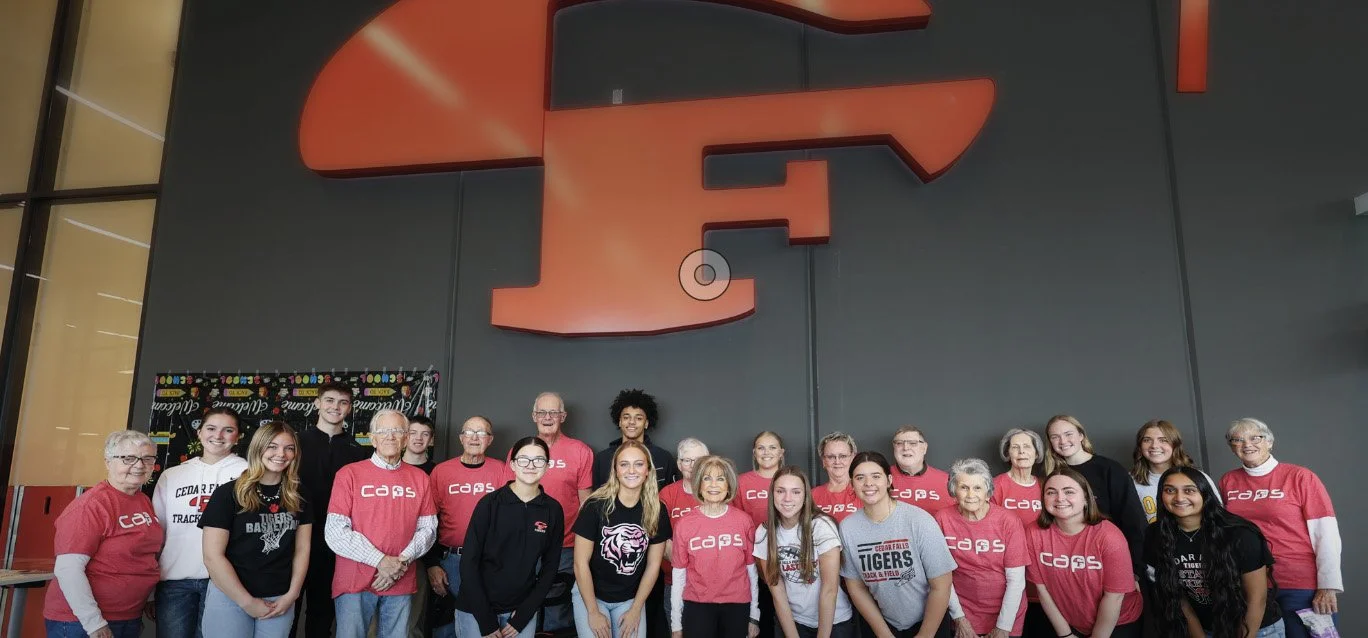
Cedar Falls CAPS students pictured with Western Home Communities mentors
The Center for Advanced Professional Studies (CAPS) in Cedar Falls is built on a simple idea: high school students shouldn’t have to guess what a career is like; they should get to experience it. Instead of only learning from textbooks, juniors and seniors in Cedar Falls CAPS spend part of their week in the community, working with real professionals on real problems and exploring paths they might want to follow after graduation.
Western Home Communities has been part of that vision almost from the beginning, especially for students interested in healthcare and education. Cedar Falls CAPS Director Ethan Wiechmann calls Western Home a “pivotal partner,” noting its willingness to host students, help shape medical experiences, and support CNA training.
For Carolyn Ayers, Director of Lifestyle Enrichment at Western Home Communities, it’s a natural fit. She describes CAPS as a national program with a local unit at Cedar Falls High School where students enroll to gain “exceptional experiences in career development, leadership development, communication skills, [and] leadership skills.”
CAPS gives students real-world exposure to see if their intended career path is the right fit. “A lot of it is to help them make better decisions when they get to college about what they want to do,” Carolyn says.
One of the most unique ways Western Home supports that exploration is through the Legacy Project.
“One of the most meaningful aspects of the Legacy Project is the opportunity for generational learning. CAPS associates spend time active-listening, asking questions, and building relationships with Western Home residents, and in the process, they gain wisdom, empathy, and perspective that can’t be replicated in a traditional classroom. Western Home Communities has been an incredible partner to CAPS—from the Legacy to CNA training and providing a host site—showing our students the incredible impact that community-based learning can have on both personal growth and professional development,” Wiechmann says.
In this program, CAPS associates in the medical and education strands are matched one-on-one with Western Home residents who volunteer to meet with them over several weeks. They meet weekly for informal, open conversations about life decisions, friendships, family, and what it was like when residents were their age. Residents respond with honesty, humor, and perspective. “It’s really been eye-opening for both the residents and the students as to what people are dealing with in the world today,” Carolyn says.
The project also helps students learn how to relate to older adults, a valuable skill in any field.
Residents gain just as much. Many miss being around their own kids and grandkids, and the program gives them a regular connection to youth and a place to tell their stories. CAPS associates often hear those stories for the first time, listening intently and asking follow-up questions. That simple act of attention helps residents feel that “some of their stories, some of their wisdom has been shared and landed someplace.”
A typical semester includes 30 to 60 students in the Legacy Project, and Western Home works to match each student with a resident. “By and large, most everybody is very willing to participate,” Carolyn says.
Villa resident and mentor Mike Dargan is one of those volunteers. Over the years, he and his wife, Cherie, have mentored “at least a dozen” students. He talks with them about habits and approaches that can help them succeed in school and later on the job. Being around CAPS students gives him energy and perspective. “It’s sort of a glimpse into the future,” he says. His favorite part is that the program gets him “outside of my shell and engaged with the community and in a very different community.”
From the student side, the combination of CAPS and Western Home mentorship is just as powerful. Seniors Emma Moran and Kate Roussell, both first-time CAPS associates, say the program helps them explore careers before they commit to them. “For our future, it helps a lot with being able to kind of have more experience before we actually are in college,” Kate says. Emma agrees: “It helps us decide what we want to do without spending a whole bunch of money in college and then realizing it’s not for us.”
Emma, who’s interested in education, uses CAPS to work with kids in different settings to figure out which grade level or subject might be the best fit. Kate, who is still undecided, values the chance to explore multiple fields.
Their time with their Western Home mentor has become one of the most distinct parts of their week. “We just talk,” Emma says. “We learn a lot.” Kate enjoys hearing about how things used to be and comparing that to her own daily life. Emma adds that his “story times” often connect directly to what they’re going through now.
Emma says CAPS has taught her that “whatever you put in, you get out,” and that it’s okay to make mistakes. Their strand of about ten students has become exceptionally close-knit through the experience.
Beyond the Legacy Project, Western Home’s partnership with CAPS runs deeper. One of Western Home’s CNA classes is dedicated specifically to CAPS students who want to earn their Certified Nursing Assistant credential before graduation. Several of those students have gone on to work at Western Home, which Carolyn sees as a clear win-win.
Western Home also hosts the CAPS Innovation Celebration at the end of the school year, where students present projects they’ve completed for companies and organizations throughout the year. Many Western Home residents attend, another subtle way the generations stay connected.
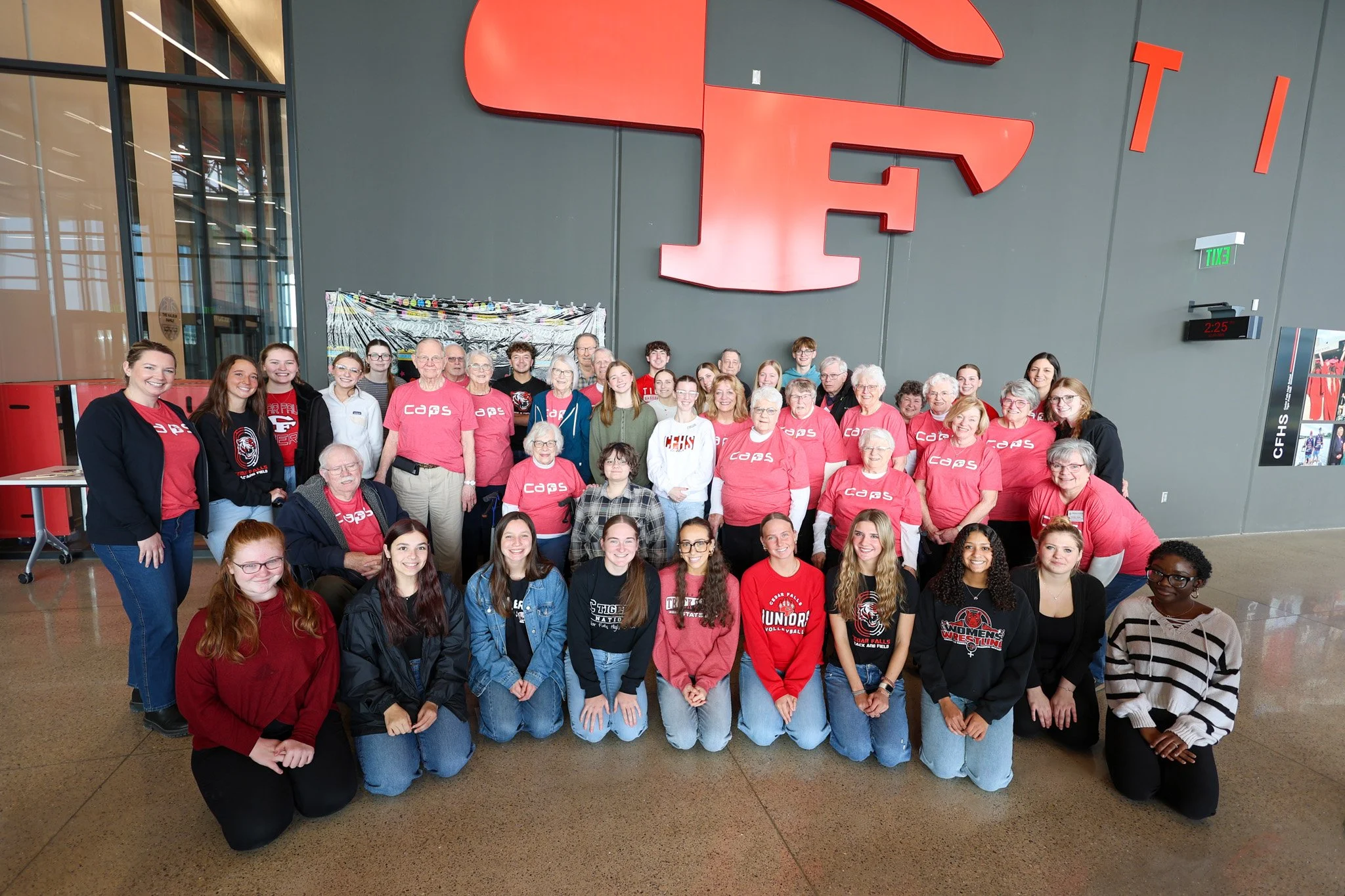
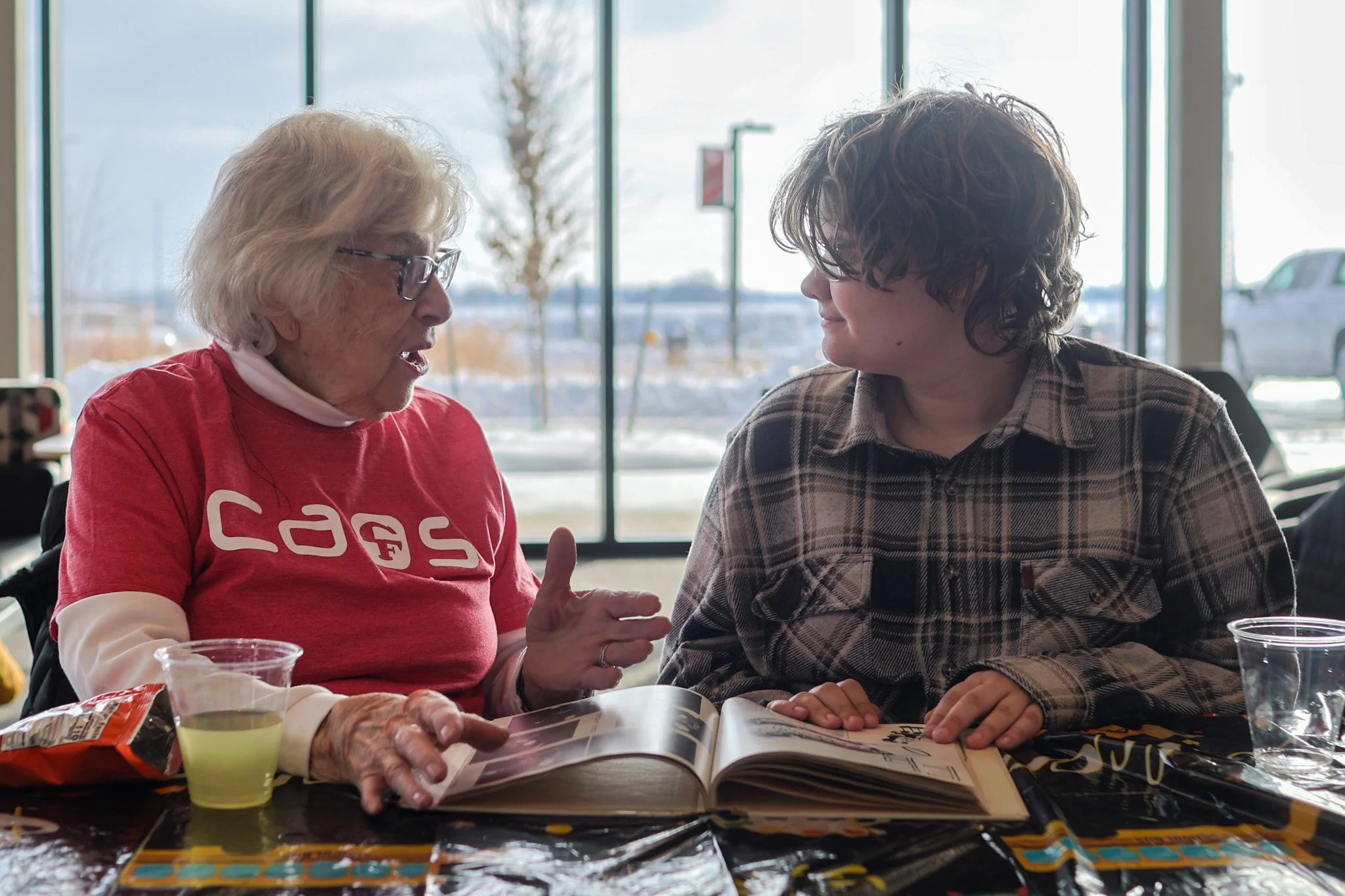
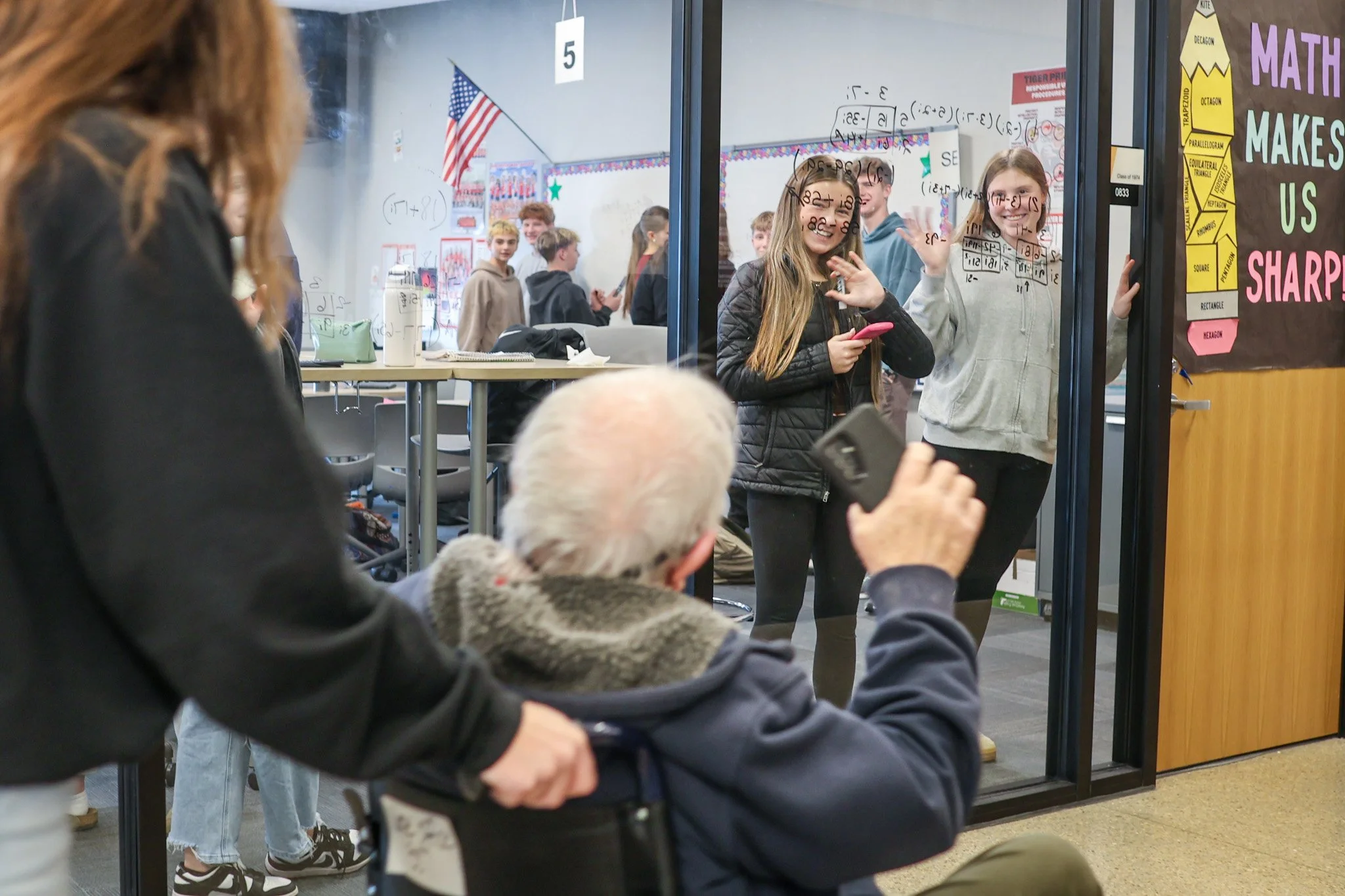
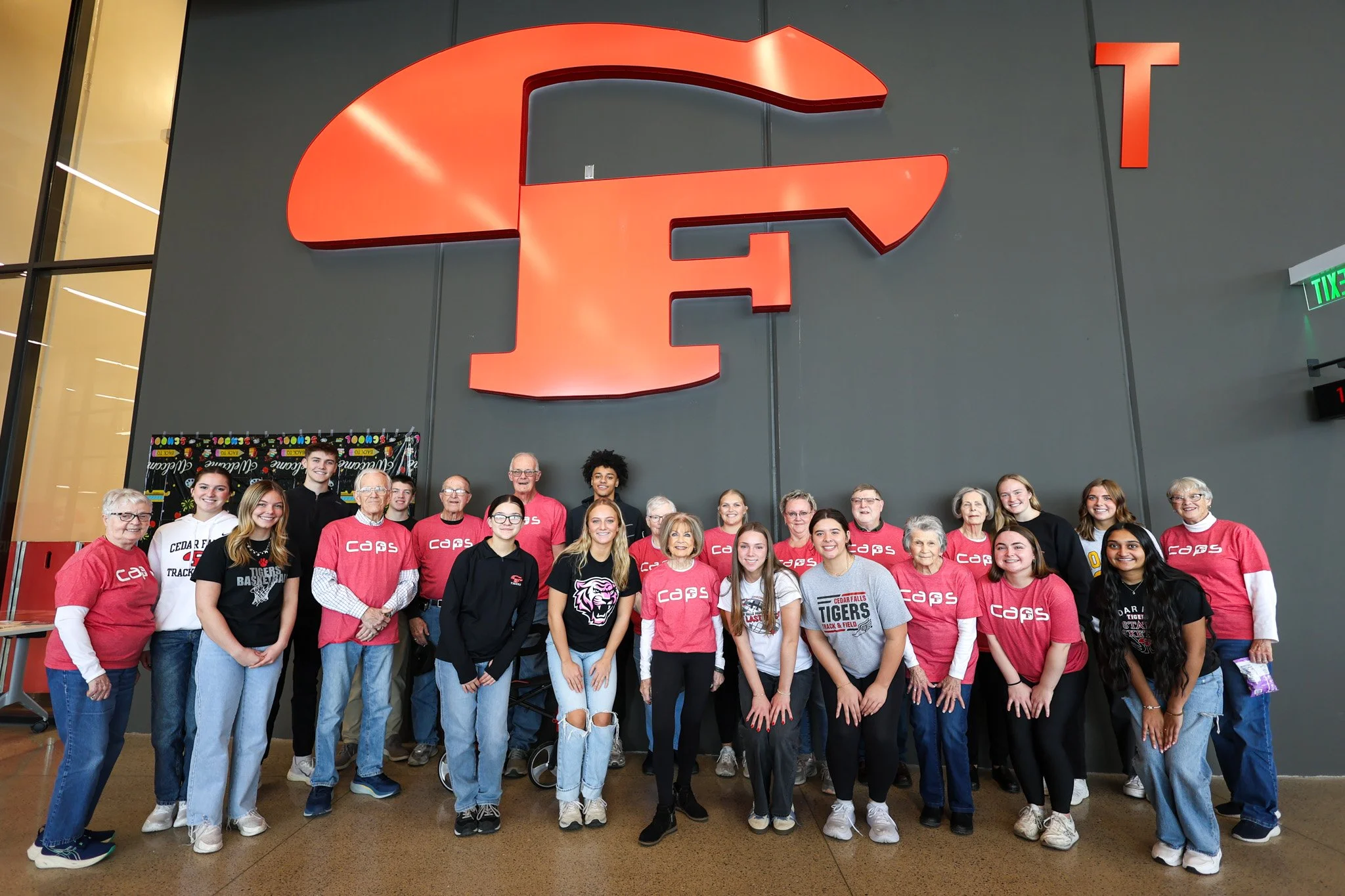
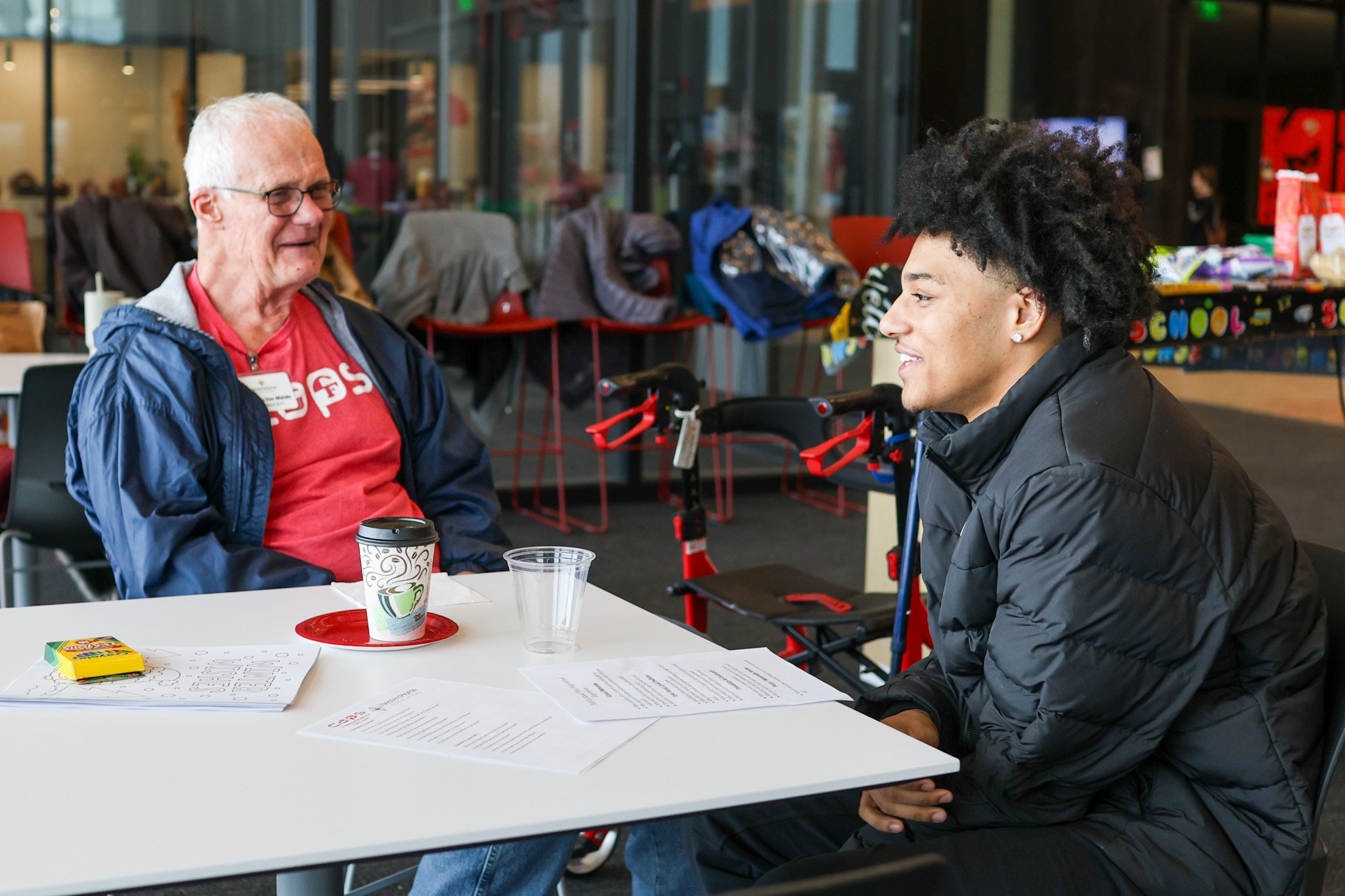
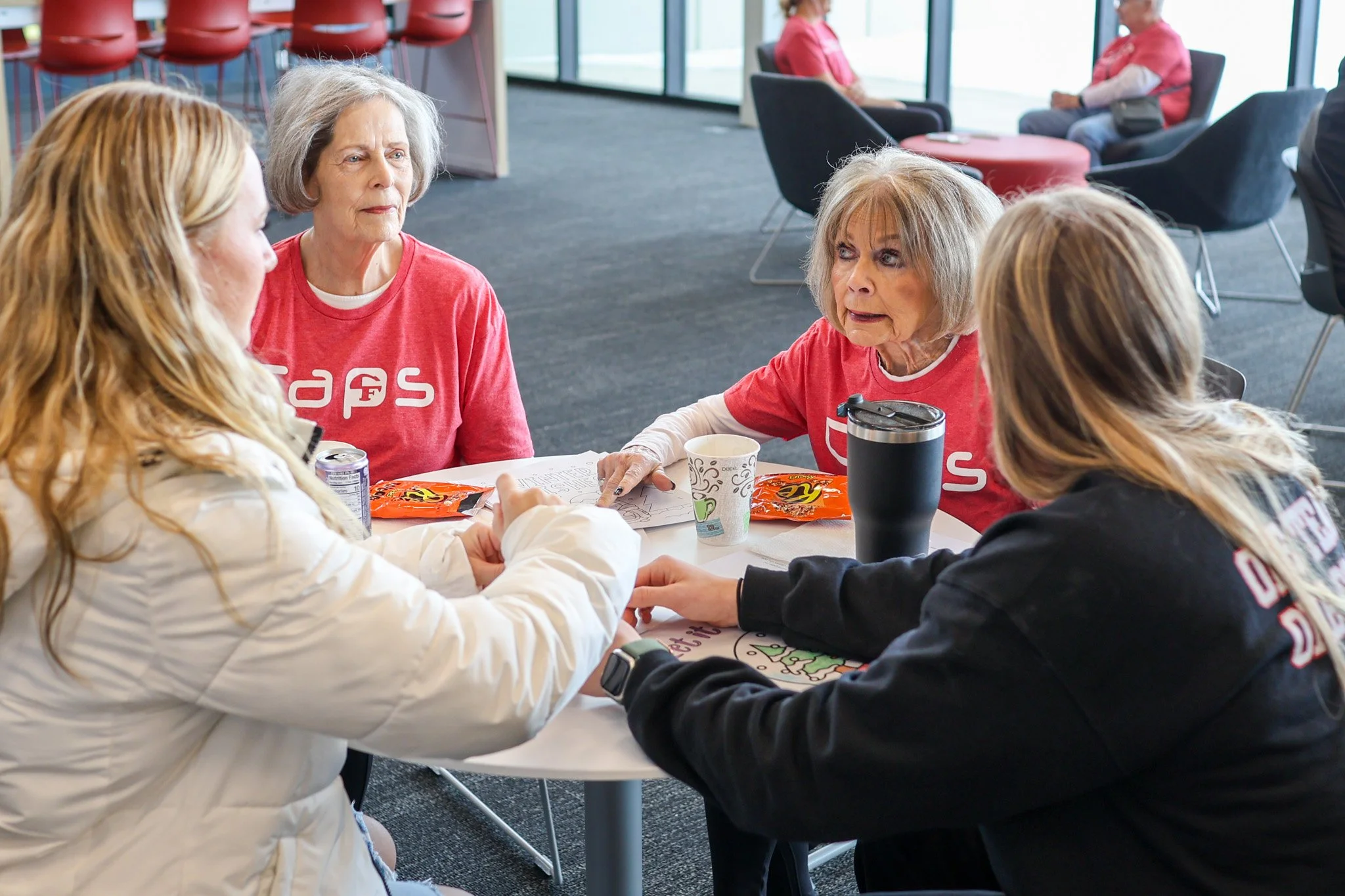
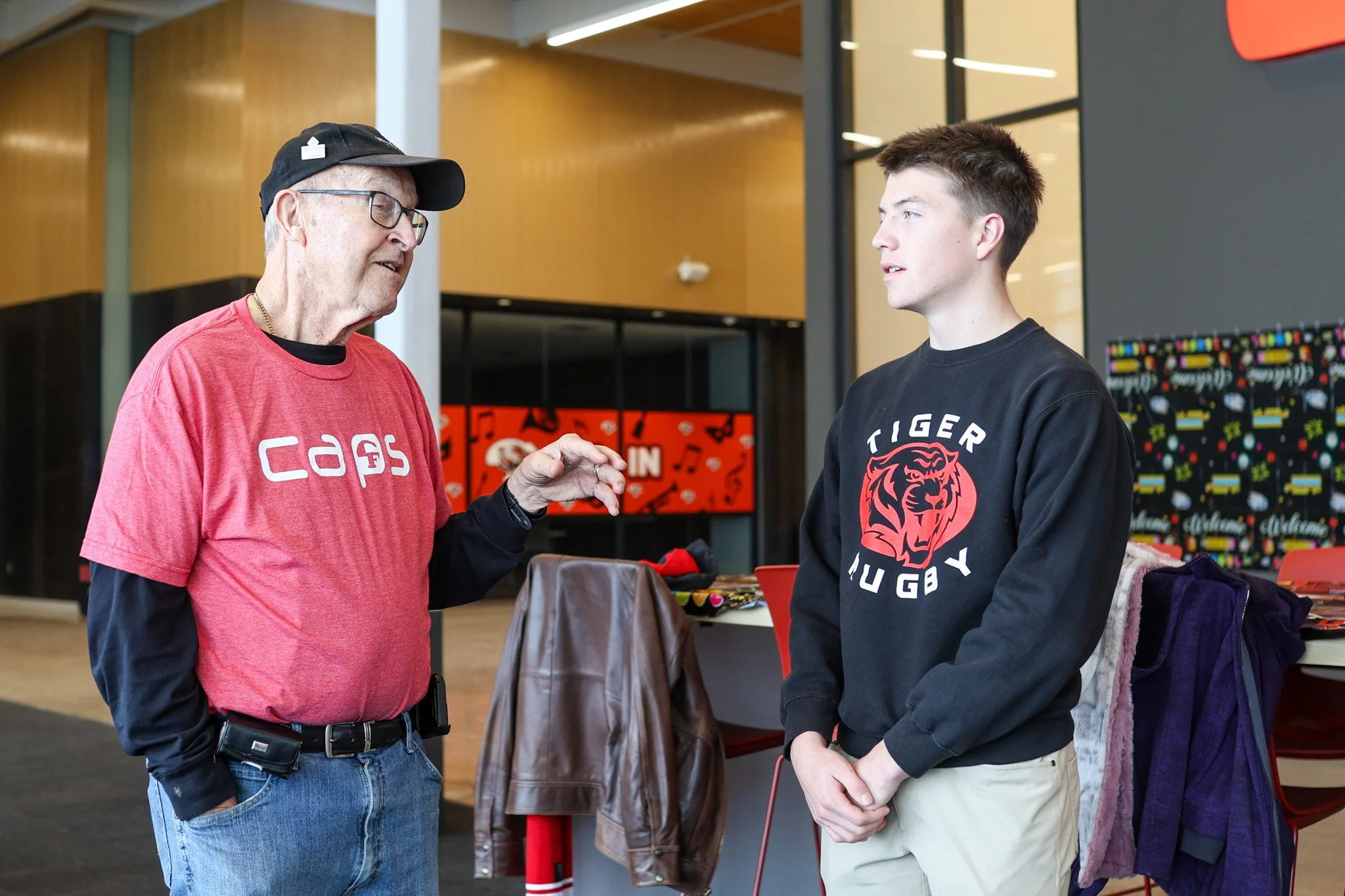
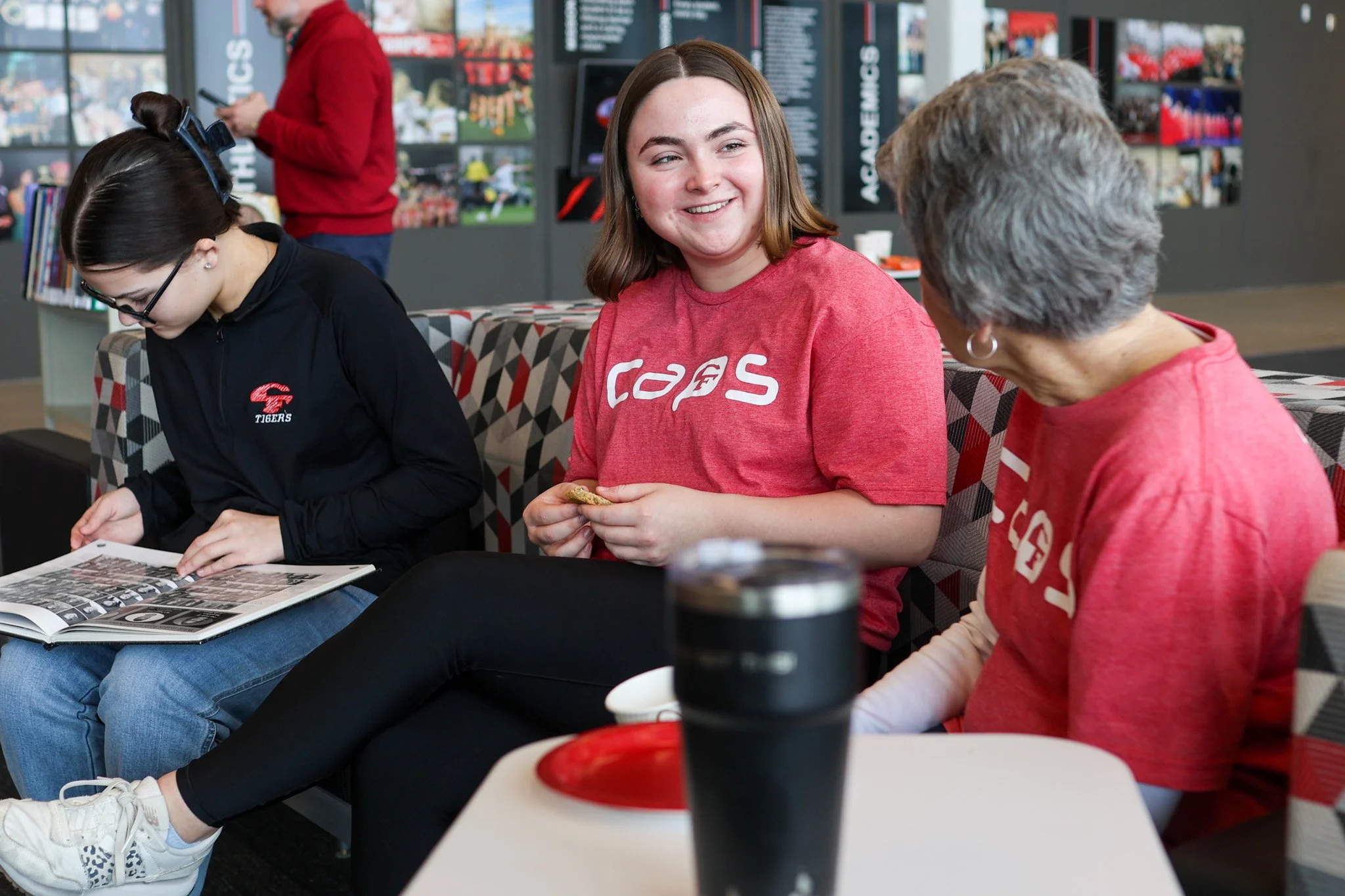
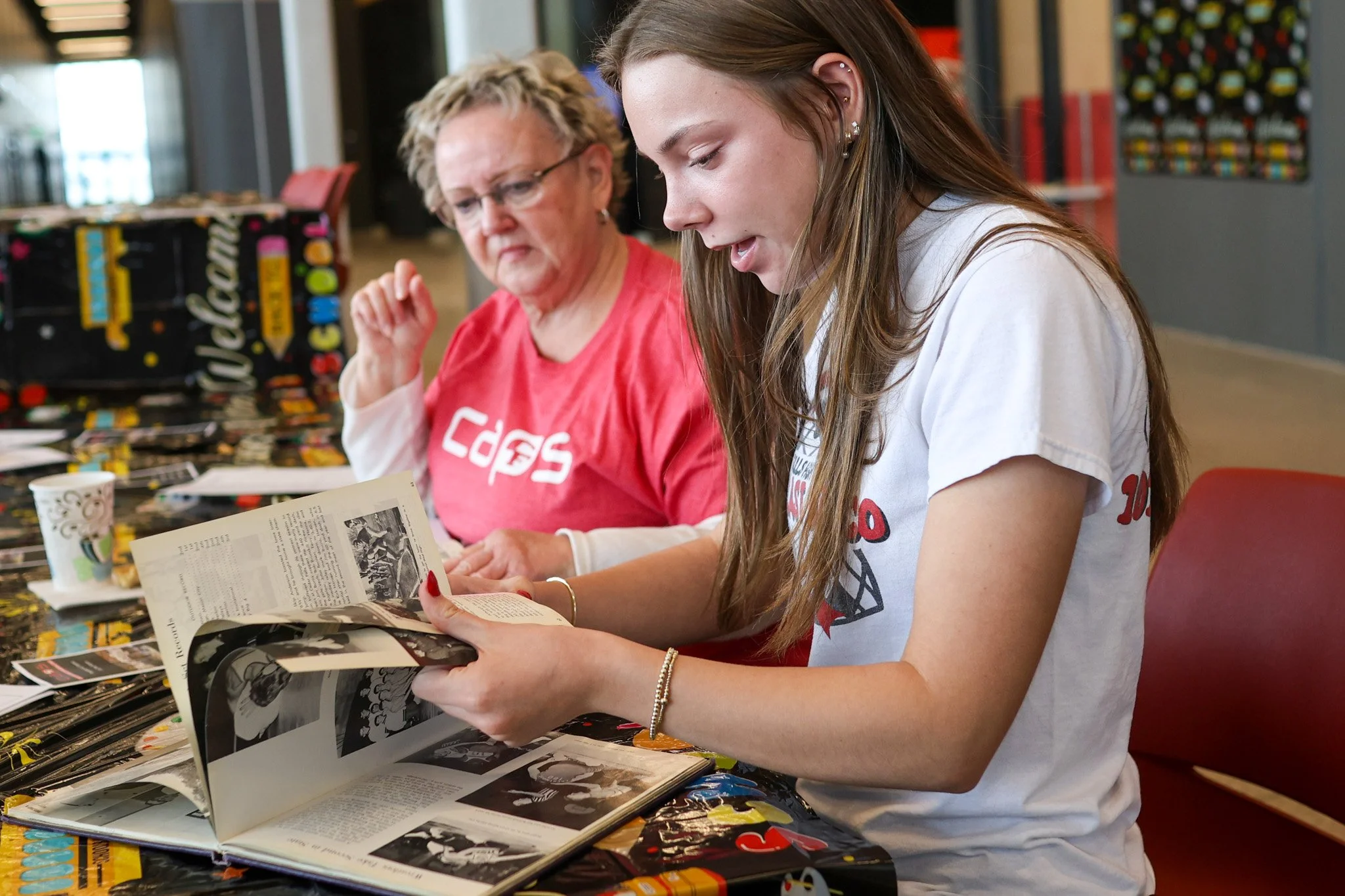
In early December, the partnership took another meaningful turn when CAPS invited Western Home residents to Cedar Falls High School for what Carolyn calls “back-to-school day.” Students wanted a chance to show off their relatively new school to the people who had been welcoming them all semester. Western Home arranged a bus to make the visit easy and accessible.
For seven weeks, CAPS students had been coming to Western Home’s campus to see where residents live. On this special day, residents stepped into the students’ world. One especially memorable moment came when students rolled out a library cart loaded with old Cedar Falls High School yearbooks. Many residents are CFHS graduates themselves, so they paged through to find their own photos, then their children’s, and sometimes even their grandchildren’s. Standing shoulder-to-shoulder with their CAPS associates, they literally leafed through generations of family and community history. Ethan often describes CAPS partnerships as a “handshake, not a handout,” mutual relationships where everyone gets something meaningful.
Western Home Communities is a vivid example of that. Businesses and organizations get real value from students’ energy and insight. Students gain experience, confidence, and connections. And Western Home residents find renewed purpose in mentoring, storytelling, and staying connected to the next generation.
What began as a creative way to expose future healthcare workers to older adults has grown into one of CAPS’ most profound and beloved experiences, one that residents, students, and staff look forward to every year. At its heart, the partnership is about two generations sitting across from each other, telling the truth about their lives, and discovering they have more in common than they imagined. The student gets a clearer picture of the future. The resident sees that their past still matters. And the community, quietly, becomes stronger for it.
