

The Recovery Coach
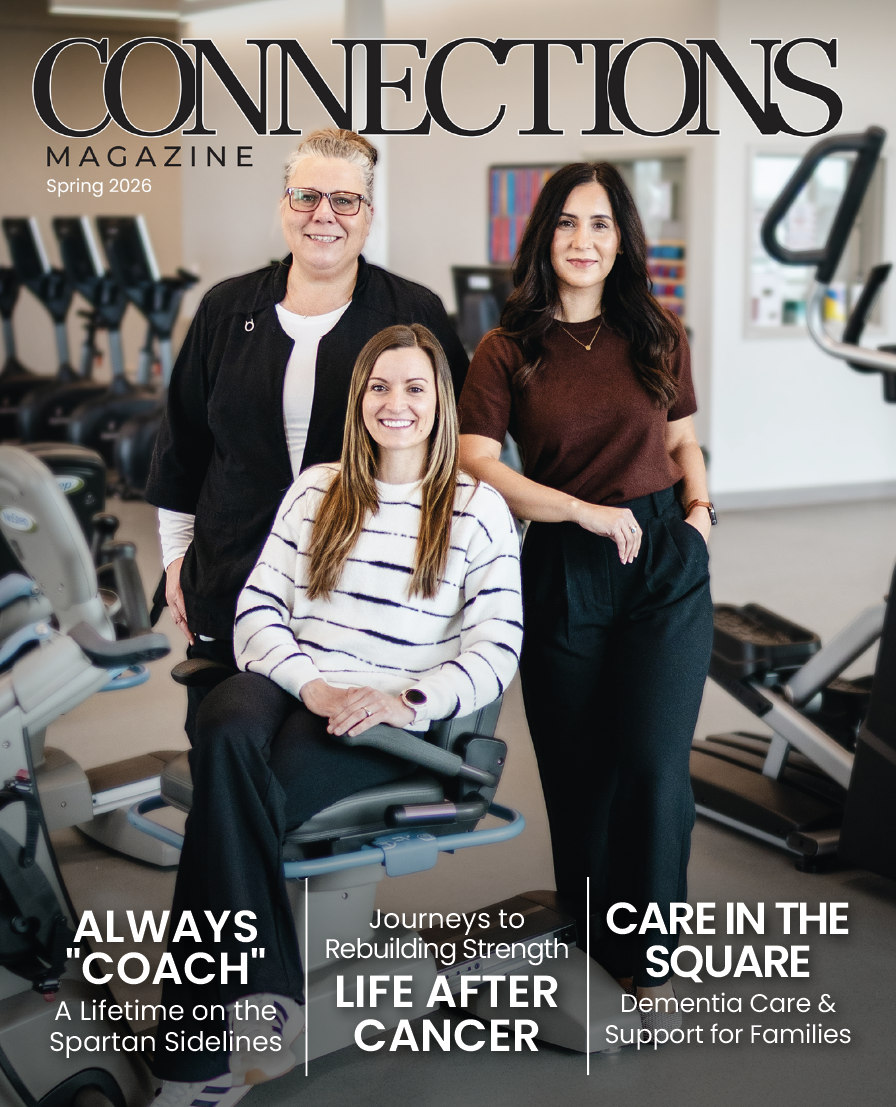
Oncology-trained therapists at Thrivera Therapy are helping redefine survivorship—supporting patients as they rebuild strength and reclaim daily life after cancer treatment.
Cancer changes a life in an instant, but what happens after treatment shapes a survivor’s future for decades. At Hanson Therapy Center, located inside Jorgensen Plaza, Thrivera Therapy is leading a quiet revolution, reframing survivorship not as an endpoint but as a new beginning. With more than 18 million cancer survivors in the U.S. today, the need for science-grounded rehabilitation has never been greater — yet only a small fraction receive it. This program began with a conversation.
Stacy Gibbs, regional director of Thrivera Therapy, recalls meeting a therapist who worked at the John Stoddard Cancer Center in Des Moines. Stacy listened as she described the PORi method, Center of Excellence standards, and the profound impact specialized oncology rehabilitation had on patients. Curious, Stacy searched the PORi directory to see who in the Cedar Valley was certified. There were none.
“If these services are good enough for John Stoddard Cancer Center,” she thought, “why aren’t we offering them here? Why should people have to travel to Des Moines for care they deserve in their own community?” That question sparked a movement.
When Stacy brought the idea to her team, she did not mandate certification. She shared the vision and invited therapists to explore the program. Those who stepped forward did so because they felt called to it. “Nobody was forced,” she said. “The therapists who chose this path did it because they’re passionate about helping this population.” The program was built on conviction, not obligation.
Today, Thrivera Therapy is officially recognized as a Center of Excellence in Oncology Rehabilitation by PORi. This designation reflects rigorous training and a commitment to evidence-based care, ensuring Cedar Valley residents receive treatment comparable to major cancer centers.
When talking with Thrivera’s oncology-trained therapists, one theme surfaced repeatedly: cancer affects every system of the body, and recovery must honor that complexity. The PORi protocol “is designed to work with all the systems in the body… throughout the entire cancer treatment cycle,” reinforcing that healing is layered and ongoing.
Survivorship becomes a continuum, welcoming patients at diagnosis, during treatment, or years into remission. The goal remains consistent: restore function, prevent complications, and help each person reclaim the parts of life that make them feel like themselves.
If there is a rallying cry, it is this: start early. Clinicians emphasized that the strongest outcomes occur when therapy begins at diagnosis. Speech Pathologist Maja Alicic put it simply: “The stronger you are at the time you start treatment, the better outcome you’re going to have. Prehab drives rehab.” This proactive approach builds strength before treatment takes its toll, establishes functional baselines, and reduces anxiety by clarifying what to expect. It can also prevent complications before they become chronic.
“Prehab drives rehab.”
Cancer treatment is rarely linear, and neither is recovery. Thrivera’s therapists design care plans that adapt through each phase. Danialle Draeger described working with a patient who had undergone chemotherapy and surgery, carefully assessing changes in strength, mobility, and overall function to guide individualized care. Therapists also watch for subtle red flags patients may overlook. “We can detect it before the patient even realizes something is wrong,” Danialle explained, allowing for quick coordination with oncologists and timely intervention — a safety net many survivors never knew they needed.
Clinical expertise is only part of the work. Jill Theobald, an occupational therapist specializing in breast cancer, described helping patients navigate fear, identity changes, and the emotional weight of treatment. She often bridges the gap between surgeons’ brief bedside interactions and patients who need compassion and clarity.
Ellen was diagnosed with breast cancer in December 2024 and began six months of chemotherapy. After chemotherapy, lumpectomy, and radiation, she developed painful cording under her arm — something she had never heard of. Referred to Thrivera Therapy, she found immediate compassion and expertise. With specialized therapy, she regained mobility and comfort.
“Healing takes time,” Ellen said. “With the right guidance, I was able to get more comfortable, regain movement, and keep making progress.”
Her experience illustrates what therapists see every day: recovery is physical, emotional, and deeply personal.
“Our therapists are empathetic,” Stacy said. “They know their role isn’t just physical treatment. They’re a listening ear. They’re the person who says, ‘What you’re feeling is normal.’” That presence transforms therapy from a medical service into a relationship that restores dignity and hope.
Stacy believes the future depends on awareness and advocacy. Nationally, fewer than 5% of cancer patients are referred for therapy, even though rehabilitation is recognized as a standard of care. “We just need one oncologist to see the impact firsthand,” she said. “From there, the momentum builds.” Stories like Ellen’s show what is possible when survivors are connected to care early. Yet survivorship extends beyond strength and mobility.
While therapy rebuilds strength and function, Salon Iris supports another dimension of survivorship: identity. For many, hair loss and skin changes can deeply affect confidence and self-image. This is where Beth Zars, director of salon services and operations, empowers her team to step in.
For Ellen, one fear rose above the rest: she would be bald for her son’s wedding. “I didn’t want to look back on that day and see ‘cancer mom,’” she said.
Referred to Beth, Ellen found more than a stylist. Beth explained what hair loss would look like and how to prepare emotionally and practically. She described the process of ordering a real-hair wig that she could craft to match Ellen’s natural hair. “It was such a relief to have someone remove one of my fears,” Ellen said.
“A wig isn’t just hair. It’s identity.”
Over 14 months, Beth walked beside her through every stage—shortening her hair, deciding when to shave it, sizing, selecting, coloring and styling the wig, and teaching her how to care for it. On the wedding day, Ellen felt like herself in every photo. “If you didn’t know, you would never guess it wasn’t my real hair,” she said. “I didn’t have to feel embarrassed or diminished.” Now Beth is guiding her through regrowth. “She gave me back the ability to feel like myself again.”
Each oncology salon service begins with a private consultation in a quiet, supportive environment. Clients bring photos of their current hair and images of when they felt most confident. Together, they recreate a look that feels familiar and authentic. As Beth often says, “A wig isn’t just hair. It’s identity.”
Salon Iris also assists with insurance navigation, wig customization, brow support, makeup consultations, lymphatic massage, and oncology-safe skincare. The staff is working toward oncology-aware certification to ensure every service is safe for treatment-affected skin.
Katy remembers arriving for her head shave in 2020 and finding the mirror covered in handwritten notes of encouragement. “I didn’t want to watch her shave it,” she said, “but Beth made me feel like I was equal to anyone else who came into the salon.” That dignity carried her forward. “Her motivation, support, and professionalism made such a huge difference in how I felt.”
Melissa chose to shave her head in celebration with family. “As my hair started to grow back in, it brought a lot of unknowns,” she said. “But Beth was right by my side, helping me navigate my new normal.” Having options—and a partner—made all the difference.
Survivors deserve more than survival. They deserve strength, comfort, dignity, and a path back to living fully. At Thrivera, that path is already being built—one person, one story, one new beginning at a time.
“It was such a relief to have somone rmove one of my fears.”
