

What More Can I Do?
How One Western Home Resident Turned a Personal Health Battle Into a Community Garden That’s Changing Lives
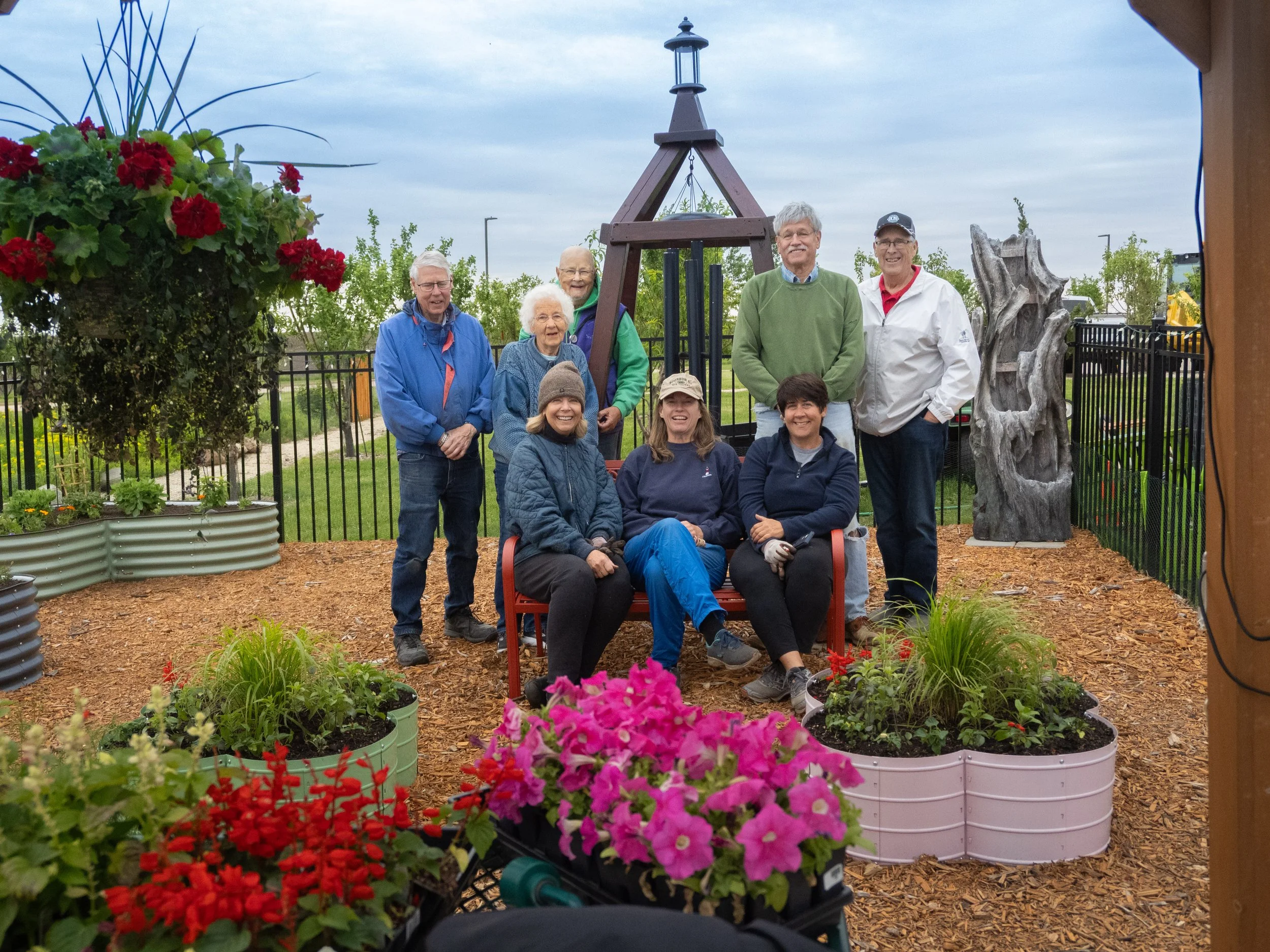
On any given morning at the Prairie Parkway Gardens the ground awakens like a small village. A volunteer kneels beside a raised bed, brushing soil from her palms. Another volunteer in a sunhat leans on a cane, offering advice to a young family learning to plant peppers. A UnityPoint Health nurse walks the orchard rows with a diabetic patient, discussing nutrition and movement while delivering hope.
And somewhere in the middle of it all, sleeves rolled up, eyes scanning the beds like a conductor attuned to harmony, is the man who started it: Rich Congdon, a Western Home resident who has shaped his life with soil, service and a single question he asks himself daily. What more can I do?
Rich’s story begins long before anyone built the first raised garden bed. As a boy, he pulled a red wagon through his neighborhood, delivering tomatoes and cucumbers to an elderly woman who fed squirrels and lived alone. “I learned early that the purpose of a garden is to share,” he says. “That’s stayed with me my whole life.”
He comes from a lineage of growers. One grandfather was a gardener; the other, a farmer. His father grew hybrid tea roses, the hardest to cultivate, and Rich eventually matched him, bloom for bloom, with 65 varieties. Gardening became the family’s language, the way they taught, connected, and cared for one another. A volunteer put it beautifully: “Rich doesn’t just grow plants. He grows people.”
The Prairie Parkway Garden didn’t begin as a grand vision. It began with pain. After being diagnosed with celiac disease and later diabetes, Rich developed a severe bone condition in his foot. The recovery was long and isolating. “I had a lot of time to think,” he says. “And I kept asking myself: what more can I do with the time I have?” The crisis became a catalyst for something larger.
He looked out at an unused patch of prairie behind the Western Home building — a forgotten space no one visited — and saw possibility. He asked maintenance if he could build a few raised beds. They agreed, and he built ten.
Then he contacted the UnityPoint Health endocrinology clinic upstairs and offered the garden as a hands-on learning center for diabetic patients. “Healthy eating, healthy living, exercise — gardening teaches all of it,” he says. “And it gives people purpose.” A UnityPoint Health nurse said, “Patients listen differently when they’re outside with Rich. He makes health feel doable.”
Rich became his own proof. By following the same nutritional principles he teaches, he lost more than 70 pounds and stabilized his health. “I’m a living example,” he says. “Good nutrition and movement change everything.”
What began as ten beds grew into a movement and is now a sprawling, community-powered wellness center.
Established in 2016, Prairie Parkway Garden features 45 raised beds and a 26-foot heated greenhouse that operates year-round. The site includes a learning center focused on nutrition, exercise and sustainable gardening. Visitors can attend classes on vertical gardening, container planting, and preparing healthy meals in just 20 minutes.
The Beacon of Hope Sensory Garden is a two-acre sanctuary thoughtfully designed to support mental health therapy, provide autism support and care for individuals living with dementia and Alzheimer’s. On the grounds, visitors can experience a “Five Senses” garden, stroll among 50 fruit trees and enjoy a variety of berry bushes, including strawberries, blueberries, currants, and raspberries. The garden also features an asparagus bed, quiet therapy spaces for personal reflection, and a memorial donor arch. Every element of the layout is intentionally crafted to foster calm, comfort, and a sense of grounding for all who visit.
A speech therapist shared: “Children with autism calm down here in minutes. It’s as if the garden breathes for them.” A dementia caregiver said: “This is the only place my husband relaxes. He remembers how to smile here.”
Rich can pinpoint the moment he realized the garden had become something bigger than himself. He had been watching a perfect two-pound tomato ripen, the kind gardeners brag about. One day, it was gone.
A volunteer later called to report that the woman who took it had returned. She was an immigrant; she and her family were struggling and needed food. “You don’t tell someone who’s trying to survive that they can’t eat,” Rich says. “Her not being hungry was more important than any tomato.” At that moment, Rich realized the garden had become more than a place to grow food. It had become a source of hope.
He took her to the farm stand, filled a bag with vegetables and told her to come back whenever she needed help. Years later, she returned with a hug and a simple message: You helped us when we needed it most. Rich shared, “That’s when I knew this place wasn’t just a garden. It was a lifeline.”
The list of supporters reads like a cross-section of Cedar Falls itself: families, small businesses, medical professionals, construction companies, Lions Club members and volunteers of every age. Peters Construction dug the orchard holes in 45 minutes using industrial equipment. Local businesses donated materials. Residents donated time, tools and stories. The heart of Cedar Falls has shown up strong.
A Lions Club member said, “Rich doesn’t ask for help. He invites you into something meaningful.” A professional volunteer staff now manages planting and logistics for the garden, allowing Rich to focus on fundraising, public speaking and vision casting.
The Prairie Parkway and Beacon of Hope gardens are now sanctuaries for people navigating illness, grief or transition. They are classrooms where families learn to cook healthy meals rather than relying on fast food. They are gathering places where generations meet, talk and share stories. A Western Home resident said: “When you walk into the garden, you feel you’re walking into hope.” The gardens have become places to learn, heal and belong.
At 80-plus years old, Rich still shows up with the same spirit he had as a boy pulling a red wagon full of tomatoes. The tools are bigger now, and the impact is wider, but the heart is the same. “I’ve been blessed,” he says. “And when you’re blessed, you give back. That’s the way I was raised.”
In Prairie Parkway Garden and the Beacon of Hope Sensory Garden, Rich has planted far more than vegetables. He has planted dignity, hope, health and community. And a living reminder that one person, asking one simple question, can change the landscape of an entire town. What more can I do? Rich answers that question every day. One seed, one class, one neighbor, one act of kindness at a time.